Empowering District Administration through Digital Innovation
Districts are the nerve centres of education delivery. Every policy decision, every new initiative, and every innovation in teaching must flow through district administration to reach classrooms. Teachers and school leaders work closely with block and district officials, not with state-level government officials. A supportive district team, therefore, can more easily recognise and resolve teachers’ issues. A local context also demands a tailored solution. Factors such as migration patterns, regional languages, and socio-economic conditions need to be factored in when applying a national-level program in a specific school. Only the district-level teams have the context and agility to adapt programs to ground-level realities.
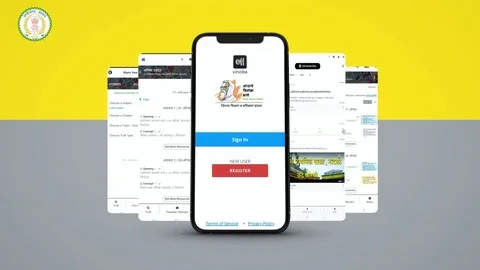
Vinoba recognises the need for this flexibility and works alongside the district administration to enable reform. It serves three functions that empower the district administration: providing a platform to communicate with teachers, acting as a tool to collect data and provide feedback on education programs, and establishing an objective and transparent system to recognise teacher efforts.
Building Bridges Through Communication
To implement any program, the district administration sends circulars and teaching materials to teachers. Normally, most of this material is sent on WhatsApp. However, teachers avoid downloading most of these documents because they clog their phones. The lack of a search function also makes finding specific documents difficult.

Vinoba functions as a communication platform that connects every level of the education hierarchy. District heads can send notifications that instantly reach block heads, who can then relay the information to cluster heads and individual teachers. This cascading communication system ensures that essential updates on new schemes, policy changes, or urgent matters reach the right people quickly and allows targeted communication within selected areas.
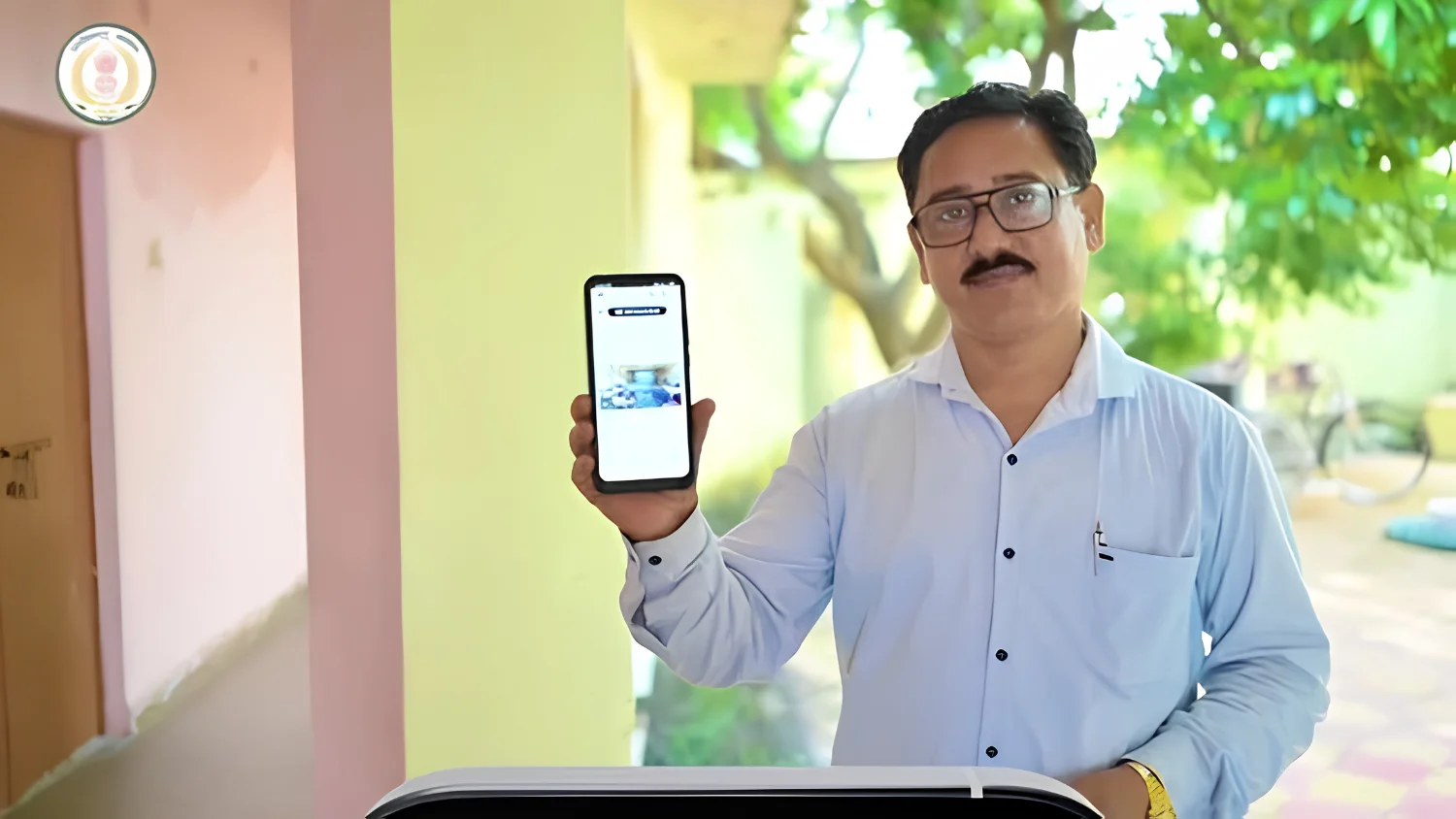
Vinoba also saves teachers’ time by consolidating all notifications and teaching materials in one place and incorporating multilingual semantic search via voice for specific documents. Marketing content also makes it easy to discover teaching materials shared by the district administration.
Sharing and Learning
Communication on Vinoba isn’t just top-down. When a teacher implements an innovative program in their school or conducts a club activity with their students, such as storytelling or poetry recitation, they can post about it on the app. Other teachers and administrators can like these posts and comment on them to provide feedback. The App serves as a platform where teachers post about their day-to-day work, which other teachers can view and interact with, creating a vibrant and supportive community.
Every post a teacher makes receives a score that’s visible to everyone. This score is calculated using a straightforward metric that factors in likes from other teachers, likes from supervisors, and total views. Because the formula is known and consistently applied, it provides a uniform baseline for recognition programs. Teachers can also see the best post in their district, block, cluster and state.
This two-way flow of information creates a unique dialogue between policymakers and practitioners, facilitated by Vinoba.
Data Collection and Insights
Good governance requires good data. For education, data can consist of specific programs, such as 10th and 12th standard practice tests, student admissions, community and alumnus participation, procedural data like Aadhar card compliance and a lot more.
However, collecting information from hundreds of schools spread out over a large area is difficult. In most districts, data was collected manually through physical papers and Google sheets – scattered across multiple systems & people. A lot of time was spent on data collection & yet data quality remained poor. District education officers were often overwhelmed by administrative tasks such as consolidating reports, conducting audits, processing transfers, and more. These education departments are usually significantly understaffed and overworked, leaving very little time for detailed data analysis to support strategic planning.
Vinoba transforms this process by conducting all data collection in one place. The app supports various data collection modes, such as forms, Excel sheets, and OMR sheets, which can be used as needed.
 In the Gariaband district, the administration wanted to collect data on the monthly practice tests conducted for the class 10 and 12 exams. Rather than distributing paper or digital forms via WhatsApp and waiting weeks for collation, Gariaband used Vinoba as the primary method to collect this data, drastically reducing the time required.
Vinoba also takes the collected data a step further, providing analyses at every level, including easily accessible role-based dashboards. This further reduces the burden on the district administration, making it easier to evaluate education policies and conduct strategic planning.
Monthly Recognition programs
Teacher motivation matters. When excellent work goes unnoticed, initiative stalls. There are very few placeholders for teacher recognition. Any initiative for teacher recognition must ensure it does not overlook deserving educators or create perceptions of favouritism.
Vinoba addresses this challenge with its objective and transparent scoring system. The App serves as a platform where the performance of all academic programs, such as 10th and 12th practise tests, life-skills programs like poetry recitation and storytelling, and teacher/student attendance, is consolidated in one place. This information is accessible to everyone.
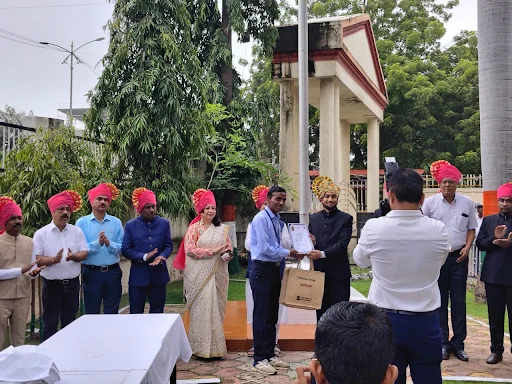
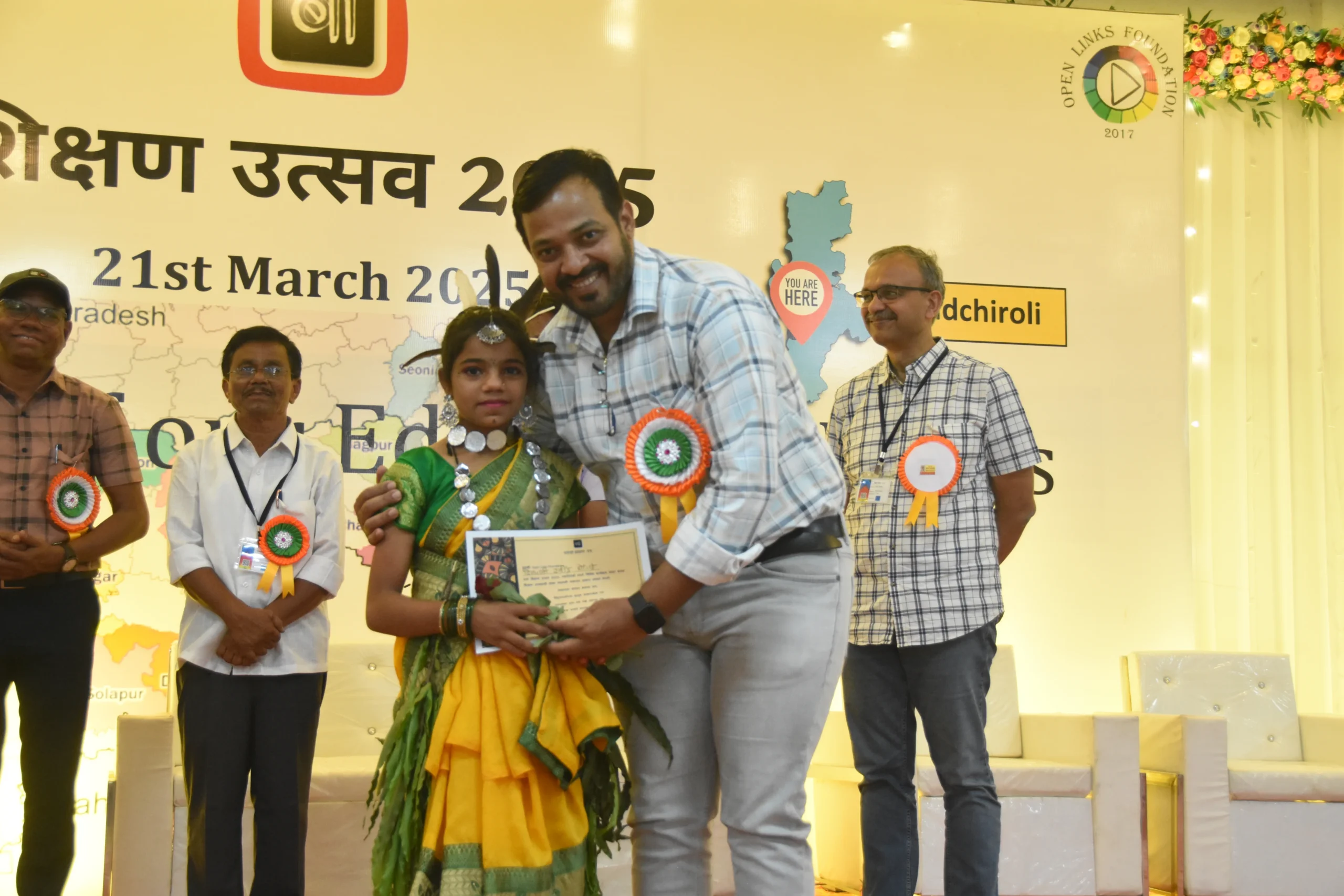
A teacher in a remote rural school now has the same opportunity for recognition as one in a well-connected urban school. An innovative teaching method or successful program implementation by a teacher can be observed, evaluated, and scored using the same set of standards across the district. This transparency builds trust in the recognition system and encourages more teachers to share their best work.
Conclusion
While each of these features is valuable on its own, the real power of Vinoba lies in how they work together. Communication flows smoothly because everyone is on the same platform. Data collection becomes easier because teachers are already engaged with the system through posts and recognition. Recognition programs provide the necessary motivation credibly because they’re built on transparent data that everyone can see.
For district administrators, this integration means they can move from reactive firefighting to proactive planning. They can identify which schools need additional resources based on survey data. They can spot innovative teaching practices through the post system and help spread them across other schools. They can make decisions based on comprehensive information rather than incomplete reports and anecdotal evidence.